


'%20x='0'%20y='0'%20height='100%25'%20width='100%25'%20%0A%20%20%20%20%20%20%20%20%20%20xlink%3Ahref='data:image/jpg;base64,/9j/2wBDAAYEBQYFBAYGBQYHBwYIChAKCgkJChQODwwQFxQYGBcUFhYaHSUfGhsjHBYWICwgIyYnKSopGR8tMC0oMCUoKSj/2wBDAQcHBwoIChMKChMoGhYaKCgoKCgoKCgoKCgoKCgoKCgoKCgoKCgoKCgoKCgoKCgoKCgoKCgoKCgoKCgoKCgoKCj/wAARCAAGAAoDASIAAhEBAxEB/8QAFgABAQEAAAAAAAAAAAAAAAAAAAYH/8QAIBAAAgEEAQUAAAAAAAAAAAAAAQIDAAQFERIGE0FRgf/EABUBAQEAAAAAAAAAAAAAAAAAAAAB/8QAFBEBAAAAAAAAAAAAAAAAAAAAAP/aAAwDAQACEQMRAD8Ax7piSKzgivrpXlmxgHbhDEI7lmKHkCGUbJ2B72D4qRfG3LuzB41DHeuROvpFKVB//9k='%3E%3C/image%3E%3C/svg%3E)

Christopher Nolan has made several films across different genres in his long career.
One thing that stands out is the way he has handled the science fiction genre. He has played with science in several of his titles.
Unlike most contemporaries, Nolan's tryst with science came out better than we had expected. So here's a list of five such instances where the storyteller used science to enhance the film.
This list consists of titles like Interstellar and Inception, among many others. So sit back and keep reading.
Disclaimer: This article is based on the writer's opinion. Reader discretion is advised.
5 instances of Christopher Nolan playing with science
1) Interstellar (2014)
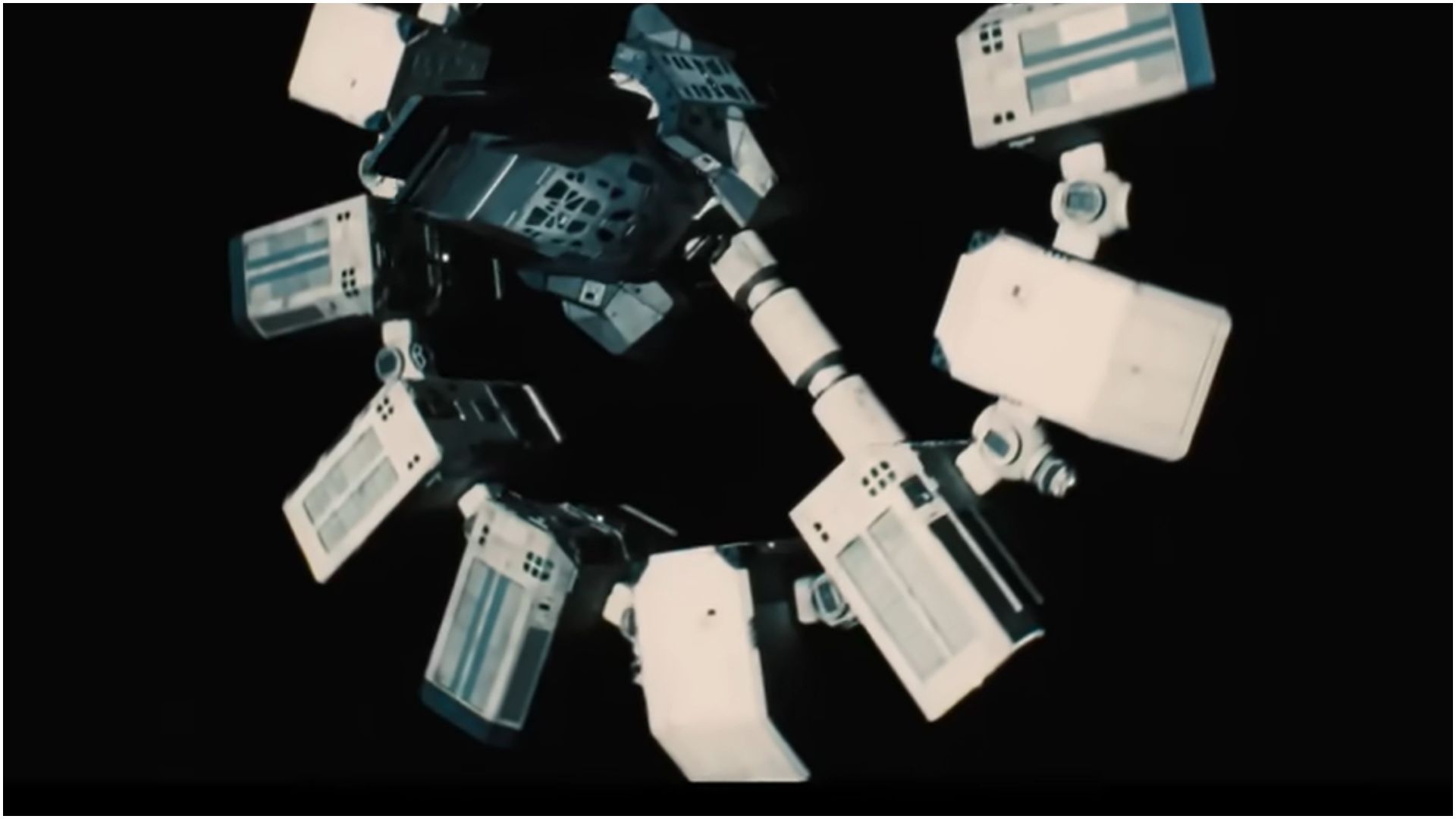
Christopher Nolan collaborated with Nobel Prize-winning theoretical physicist Kip Thorne for Interstellar. This means that the film was scientifically accurate. With Thorne's feedback, Nolan managed to visually showcase the wormhole. It was possibly one of the first instances of a wormhole being visually depicted in a mainstream Hollywood film. The film also showcased the astronauts going to a planet for one hour, which would cause seven hours of loss on Earth. This is also rooted in scientific accuracy.
2) Tenet (2020)
Tenet showcases the exploration of entropy inversion. This theoretical concept is about moving backward through time. The action thriller film uses this concept to the fullest, and the result is an engaging story. Nolan takes creative liberties with this idea but sticks to the roots of science.
While the film met with mixed critical response, Nolan's use of the concept remains its high point. It's one of the interesting moments of him using science to surprise audiences.
3) Oppenheimer (2023)
Oppenheimer is based on the life of J. Robert Oppenheimer, and Christopher Nolan uses nuclear physics and quantum mechanics for it. The director reportedly read about nuclear physics in detail to get everything right. The Trinity test has been attributed as an authentic depiction while being a visual spectacle. It earned Nolan his Best Director Oscar.
4) Inception (2010)
Inception deals with dreams, layered reality, and our subconscious. It digs deep into a dream, being inside a dream through an engaging thriller plot. Christopher Nolan uses real-life scientific concepts like the Penrose stairs. Inception remains one of the most innovative uses of science. It's a major critical and commercial success.
5) The Prestige (2006)
The Prestige focuses on the rivalry between two magicians in 1890s London. Science remains a major theme of this storyline as part of another layer of magic. It showcases a magician reaching out to scientist Nikola Tesla to create a machine that clones people. The film also showcases the true cost of such scientific discoveries and experiments.
After Interstellar's release, Nolan had stated that viewers might have to watch the film more than once to understand it. I believe this applies to all his films as they require multiple viewings to fully grasp everything.
 Trending
Stay tuned to Soap Central for more such stories.

Love movies? Try our Box Office Game and Movie Grid Game to test your film knowledge and have some fun!


 Reply
Reply


